Fact Check: Less people are getting Potty trained

Fact Check: Less people are getting Potty trained

Published August 24, 2025
VERDICT
True

# Fact-Check Article: "Less People Are Getting Potty Trained" ## What We Know The claim that fewer children are getting potty trained at an earlier a...

Fact-Check Article: "Less People Are Getting Potty Trained"

What We Know

The claim that fewer children are getting potty trained at an earlier age is supported by a variety of sources that document a significant shift in potty training practices over the decades. Historically, children were potty trained much earlier; for instance, in the 1950s, nearly 100% of children were trained by 18 months, primarily using cloth diapers. However, this trend has changed dramatically. According to a blog post from Thirsties Baby, today only about 10% of children are potty trained by 18 months, with the average age for potty training now around 30 months. This increase in age is attributed to the widespread use of disposable diapers, which have made it more convenient for parents to delay potty training.

Furthermore, a historical overview from Go Potty Now indicates that the average age for potty training has risen from around 1 year in the 1940s to approximately 3 years in contemporary Western societies. This change is influenced by evolving parenting philosophies that emphasize waiting until a child is developmentally ready, a view popularized by pediatricians like T. Berry Brazelton.

Analysis

The evidence supporting the claim that fewer children are getting potty trained at a younger age is compelling and comes from multiple reliable sources. For example, a study cited by Potty Genius highlights a dramatic decline in early potty training, noting that in 1957, 92% of children were trained by 18 months, whereas by 1999, only 4% of two-year-olds had achieved this milestone. This stark contrast underscores the trend of later potty training.

Moreover, the Big Toilet Project corroborates these findings, stating that the average age of toilet training has shifted significantly, particularly in higher-income countries. The blog notes that children were typically trained by 28 months in the 1950s, but this has now extended well into the third year of life.

While some sources, such as CNN, emphasize that children may be physiologically ready for training around 18 months, they also acknowledge that cognitive readiness varies, which may contribute to the delay in training. This perspective aligns with modern parenting practices that prioritize a child's individual readiness over strict timelines.

The reliability of these sources is generally high, as they are based on historical data, expert opinions, and observational studies. However, it is important to note that some sources may have inherent biases based on their target audience or the products they promote (e.g., diaper companies). Nonetheless, the overall trend is well-documented across multiple independent platforms.

Conclusion

The claim that fewer children are getting potty trained at an earlier age is True. The evidence indicates a clear trend towards later potty training, with significant increases in the average age at which children are trained. This shift is largely influenced by the convenience of disposable diapers and evolving parenting philosophies that prioritize child readiness.

Sources

  1. When to Start Potty Training: A Brief History
  2. Why Are Babies Potty-Training Later?
  3. Changing toilet training trends - Big Toilet Project
  4. How the world potty trains
  5. The Changing Times: How Potty Training Ages Have Shifted
  6. Are Children Really Potty Training Later? | The Nappy Gurus
  7. Why Are Today's Children Toilet Trained Later?
  8. Why are children potty training later? - ERIC

Have a claim you want to verify? It's 100% Free!

Our AI-powered fact-checker analyzes claims against thousands of reliable sources and provides evidence-based verdicts in seconds. Completely free with no registration required.

💡 Try:
"Coffee helps you live longer"
100% Free
No Registration
Instant Results

Comments

Leave a comment

Loading comments...

More Fact Checks to Explore

Discover similar claims and stay informed with these related fact-checks

🔍
True
🎯 Similar

Fact Check: Autistic Non-Verbal Episodes in Marriage: Why Words Vanish Sometimes and What to Do About It Neurodiverse Couples Tuesday, august 12, 2025. Here’s the scene: You’re in the middle of a conversation with your spouse. Maybe the topic is small (“Did you pay the water bill?”) or monumental (“Are we happy?”). And then—without warning—your autistic partner’s voice disappears. No yelling, no slammed doors. Just… gone. You’re left holding the conversational steering wheel while they’ve quietly climbed into the trunk. If you’ve never lived with high-functioning autism, this can be tragically misconstrued as stonewalling or contempt. It isn’t. It’s just neurology pulling the emergency brake. Why This Happens: The Science Without the Lab Coat Smell For autistic adults, losing speech under stress is often a shutdown—a form of nervous system overload that knocks language production offline. Think of it like your phone freezing: all the apps are still there, but none of them open when you tap. Research calls this autistic burnout when it happens in a longer, chronic cycle—linked to masking (Hull et al., 2017; Raymaker et al., 2020). Masking is the art of “performing normal” so well that non-autistic people think you’re fine. The issue is that it eats through your energy reserves like a car idling in traffic with the A/C on full blast (Mantzalas et al., 2022). Eventually, one hard conversation can tip you from functional to frozen. And here’s where couples therapy meets neuroscience: physiological flooding—the body’s fight/flight/freeze switch—is a known relationship killer (Malik et al., 2019; Gottman Institute, 2024). In other words, for some autistic partners, flooding may tend to show up sooner, last longer, and is more likely to pull the plug on speech entirely. The Danger Loop in Marriage Autistic partner goes non-verbal — brain says “nope.” Non-autistic partner reads it as avoidance — brain says “attack.” Pressure increases — “Just say something.” Shutdown deepens — and now you’ve both lost. Do that a few hundred times and you’ll start conflating a physiological response into a moral failing. That’s the real marriage-killer. The Protocol: Three Phases, Zero Guesswork This is where we get practical. You can’t “love away” a temporary shutdown, but you can stop it from turning into World War III. Before: Build the Net Name the state. Agree on a phrase or signal ( I call this a couple code)—such as “words offline,” “shutdown,” a hand over the heart. The point is to make the invisible visible. The Shutdown Card. A literal card that says: I can’t speak right now. Please lower lights, reduce sound, give me X minutes. I promise I will circle back. The Pause Rule. Require a minimum of 20 minutes before resuming any tough talk. Autistic partner may need 90+. Agree ahead of time. Downgrade Kit. the usual gear; earplugs, soft light, weighted blanket, fidget, a quiet room. You know, human decency in object form. Reduce Daily Load. Avoid heavy talks right after work or big social events. Chronic overload makes a nervous shutdown more probable. During: Do Less, Better Autistic Partner: Give the signal. Exit stimulation. Switch channels if possible (text, notes app, yes/no cards). Send a short pre-written message: “Safe, can’t talk, back at 8:15.” Non-Autistic Partner: Acknowledge once—“Got it, I’m with you.” Hold the pause boundary. Lower stimuli. Go regulate your own nervous system—walk, journal, pet the dog. Don’t rehearse comebacks. Both: Avoid sarcasm, interrogation, ultimatums. Nothing lengthens a shutdown like moral outrage. After: Close the Loop Check in: “Are you ready to talk, or should we start in text?” Debrief: Identify triggers and what helped. Solve the actual problem. No conflict gets left to rot in the corner. Spot burnout early. If shutdowns start clustering, it’s time to reduce demands, not double them. How This Isn’t Stonewalling Stonewalling is a choice. Shutdown is a lockout. Stonewalling says, “I won’t talk to you.” Shutdown says, “I can’t talk to you yet, but I will.” The key difference? Repair intention. A shutdown protocol builds that right into the process. The Ten-Minute At-Home Drill Co-create your signal and card. Agree on a pause window. Pack the downgrade kit. Rehearse the exchange (“Got it, I’m with you.”). Check in weekly to tweak the system. Remember, you’re not aiming for zero shutdowns. You’re aiming for shorter, kinder, safer ones. Why This Works Because it matches lived autistic experience (Raymaker et al., 2020; Lewis et al., 2023). Because it honors nervous system limits instead of punishing them (Malik et al., 2019). Because it lets both partners keep their dignity and still solve the problem. In other words: you’re building a marriage that can survive the occasional moments when the words are gone for the time being. Be Well, Stay Kind, and Godspeed. REFERENCES: Hull, L., Mandy, W., Lai, M.-C., Baron-Cohen, S., Allison, C., Smith, P., & Petrides, K. V. (2017). “Putting on my best normal”: Social camouflaging in adults with autism spectrum conditions. Autism, 21(5), 611–622. https://doi.org/10.1177/1362361316671012 Raymaker, D. M., Teo, A. R., Steckler, N. A., Lentz, B., Scharer, M., Delos Santos, A., … & Nicolaidis, C. (2020). “Having all of your internal resources exhausted beyond measure and being left with no clean-up crew”: Defining autistic burnout. Autism in Adulthood, 2(2), 132–143. https://doi.org/10.1089/aut.2019.0079 Mantzalas, J., Richdale, A. L., Adikari, A., Lowe, J., & Dissanayake, C. (2022). What Is Autistic Burnout? A thematic analysis of posts on two online platforms. Autism in Adulthood, 4(1), 52–65. https://doi.org/10.1089/aut.2021.0079 Lewis, L. F., et al. (2023). The lived experience of meltdowns for autistic adults. Autism, 27(7), 1787–1799. https://doi.org/10.1177/13623613221145783 Malik, J., et al. (2019). Emotional flooding in response to negative affect in romantic relationships. Journal of Couple & Relationship Therapy, 18(4), 327–349. https://doi.org/10.1080/15332691.2019.1641188 Gottman Institute. (2024, March 4). Making sure emotional flooding doesn’t capsize your relationship. Retrieved from https://www.gottman.com/blog/making-sure-emotional-flooding-doesnt-capsize-your-relationship/


Detailed fact-check analysis of: Autistic Non-Verbal Episodes in Marriage: Why Words Vanish Sometimes and What to Do About It Neurodiverse Couples Tuesday, august 12, 2025. Here’s the scene: You’re in the middle of a conversation with your spouse. Maybe the topic is small (“Did you pay the water bill?”) or monumental (“Are we happy?”). And then—without warning—your autistic partner’s voice disappears. No yelling, no slammed doors. Just… gone. You’re left holding the conversational steering wheel while they’ve quietly climbed into the trunk. If you’ve never lived with high-functioning autism, this can be tragically misconstrued as stonewalling or contempt. It isn’t. It’s just neurology pulling the emergency brake. Why This Happens: The Science Without the Lab Coat Smell For autistic adults, losing speech under stress is often a shutdown—a form of nervous system overload that knocks language production offline. Think of it like your phone freezing: all the apps are still there, but none of them open when you tap. Research calls this autistic burnout when it happens in a longer, chronic cycle—linked to masking (Hull et al., 2017; Raymaker et al., 2020). Masking is the art of “performing normal” so well that non-autistic people think you’re fine. The issue is that it eats through your energy reserves like a car idling in traffic with the A/C on full blast (Mantzalas et al., 2022). Eventually, one hard conversation can tip you from functional to frozen. And here’s where couples therapy meets neuroscience: physiological flooding—the body’s fight/flight/freeze switch—is a known relationship killer (Malik et al., 2019; Gottman Institute, 2024). In other words, for some autistic partners, flooding may tend to show up sooner, last longer, and is more likely to pull the plug on speech entirely. The Danger Loop in Marriage Autistic partner goes non-verbal — brain says “nope.” Non-autistic partner reads it as avoidance — brain says “attack.” Pressure increases — “Just say something.” Shutdown deepens — and now you’ve both lost. Do that a few hundred times and you’ll start conflating a physiological response into a moral failing. That’s the real marriage-killer. The Protocol: Three Phases, Zero Guesswork This is where we get practical. You can’t “love away” a temporary shutdown, but you can stop it from turning into World War III. Before: Build the Net Name the state. Agree on a phrase or signal ( I call this a couple code)—such as “words offline,” “shutdown,” a hand over the heart. The point is to make the invisible visible. The Shutdown Card. A literal card that says: I can’t speak right now. Please lower lights, reduce sound, give me X minutes. I promise I will circle back. The Pause Rule. Require a minimum of 20 minutes before resuming any tough talk. Autistic partner may need 90+. Agree ahead of time. Downgrade Kit. the usual gear; earplugs, soft light, weighted blanket, fidget, a quiet room. You know, human decency in object form. Reduce Daily Load. Avoid heavy talks right after work or big social events. Chronic overload makes a nervous shutdown more probable. During: Do Less, Better Autistic Partner: Give the signal. Exit stimulation. Switch channels if possible (text, notes app, yes/no cards). Send a short pre-written message: “Safe, can’t talk, back at 8:15.” Non-Autistic Partner: Acknowledge once—“Got it, I’m with you.” Hold the pause boundary. Lower stimuli. Go regulate your own nervous system—walk, journal, pet the dog. Don’t rehearse comebacks. Both: Avoid sarcasm, interrogation, ultimatums. Nothing lengthens a shutdown like moral outrage. After: Close the Loop Check in: “Are you ready to talk, or should we start in text?” Debrief: Identify triggers and what helped. Solve the actual problem. No conflict gets left to rot in the corner. Spot burnout early. If shutdowns start clustering, it’s time to reduce demands, not double them. How This Isn’t Stonewalling Stonewalling is a choice. Shutdown is a lockout. Stonewalling says, “I won’t talk to you.” Shutdown says, “I can’t talk to you yet, but I will.” The key difference? Repair intention. A shutdown protocol builds that right into the process. The Ten-Minute At-Home Drill Co-create your signal and card. Agree on a pause window. Pack the downgrade kit. Rehearse the exchange (“Got it, I’m with you.”). Check in weekly to tweak the system. Remember, you’re not aiming for zero shutdowns. You’re aiming for shorter, kinder, safer ones. Why This Works Because it matches lived autistic experience (Raymaker et al., 2020; Lewis et al., 2023). Because it honors nervous system limits instead of punishing them (Malik et al., 2019). Because it lets both partners keep their dignity and still solve the problem. In other words: you’re building a marriage that can survive the occasional moments when the words are gone for the time being. Be Well, Stay Kind, and Godspeed. REFERENCES: Hull, L., Mandy, W., Lai, M.-C., Baron-Cohen, S., Allison, C., Smith, P., & Petrides, K. V. (2017). “Putting on my best normal”: Social camouflaging in adults with autism spectrum conditions. Autism, 21(5), 611–622. https://doi.org/10.1177/1362361316671012 Raymaker, D. M., Teo, A. R., Steckler, N. A., Lentz, B., Scharer, M., Delos Santos, A., … & Nicolaidis, C. (2020). “Having all of your internal resources exhausted beyond measure and being left with no clean-up crew”: Defining autistic burnout. Autism in Adulthood, 2(2), 132–143. https://doi.org/10.1089/aut.2019.0079 Mantzalas, J., Richdale, A. L., Adikari, A., Lowe, J., & Dissanayake, C. (2022). What Is Autistic Burnout? A thematic analysis of posts on two online platforms. Autism in Adulthood, 4(1), 52–65. https://doi.org/10.1089/aut.2021.0079 Lewis, L. F., et al. (2023). The lived experience of meltdowns for autistic adults. Autism, 27(7), 1787–1799. https://doi.org/10.1177/13623613221145783 Malik, J., et al. (2019). Emotional flooding in response to negative affect in romantic relationships. Journal of Couple & Relationship Therapy, 18(4), 327–349. https://doi.org/10.1080/15332691.2019.1641188 Gottman Institute. (2024, March 4). Making sure emotional flooding doesn’t capsize your relationship. Retrieved from https://www.gottman.com/blog/making-sure-emotional-flooding-doesnt-capsize-your-relationship/

Aug 12, 2025
Read more →
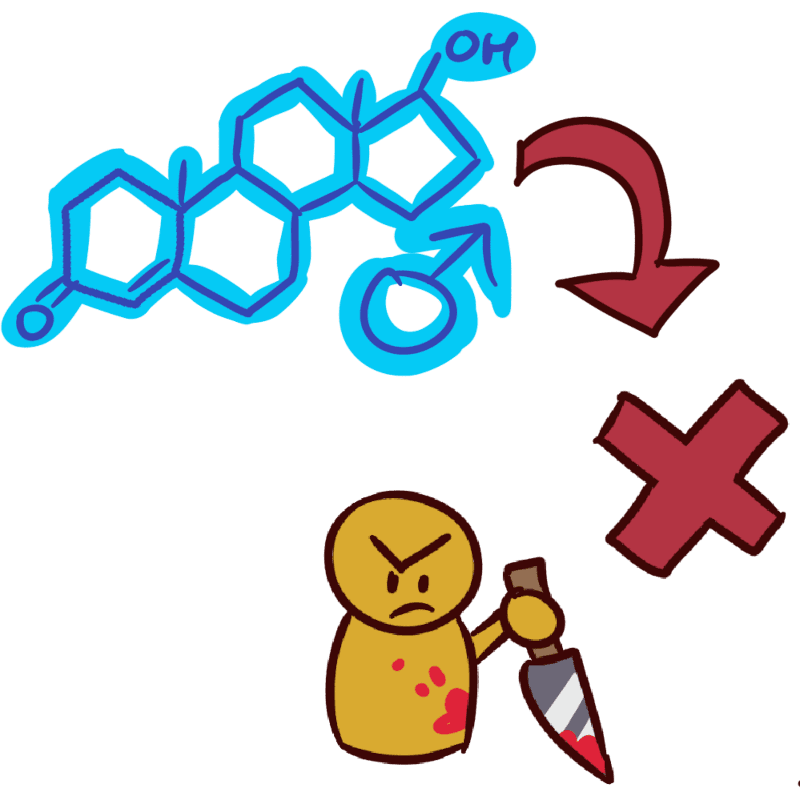
Fact Check: Less testosterone make people less violent
Partially True
🎯 Similar

Fact Check: Less testosterone make people less violent

Detailed fact-check analysis of: Less testosterone make people less violent

Aug 24, 2025
Read more →
Fact Check: We have 50 years of
data that tells us what
corporations do with tax cuts.
This has been one of the most
studied things by universities
around the world for the last
50 years. And in the last 50
years across 18 of the
wealthiest nations in the world
not one has corporate tax cuts
equated to higher job growth.
00:35
Not once. Or we can just look
at the Trump tax cuts passed in
twenty 17. Donald Trump created
40, 000 less jobs a month than
Barack Obama did. And oh by the
way that's leaving out COVID.
That's leaving out all the job
losses from the pandemic. There
is one thing that happens when
you give corporations big tax
breaks. This right here. 50
years of data. You see that red
line on top? That's the rich
getting richer. You see those
two lines on the bottom? That's
the bottom 905percent? No In
01:06
twenty 18 corporations spent
over a trillion dollars on
stock buybacks and created less
jobs than they did in twenty
fourteen, 15, 16, and
seventeen. You see the rich can
afford to pump all of this
misinformation into your brain.
And that's why you believe it.
There's not a single case in
history of tax cuts for the
rich helping an economy in any
way shape or form.
Partially True
🎯 Similar

Fact Check: We have 50 years of data that tells us what corporations do with tax cuts. This has been one of the most studied things by universities around the world for the last 50 years. And in the last 50 years across 18 of the wealthiest nations in the world not one has corporate tax cuts equated to higher job growth. 00:35 Not once. Or we can just look at the Trump tax cuts passed in twenty 17. Donald Trump created 40, 000 less jobs a month than Barack Obama did. And oh by the way that's leaving out COVID. That's leaving out all the job losses from the pandemic. There is one thing that happens when you give corporations big tax breaks. This right here. 50 years of data. You see that red line on top? That's the rich getting richer. You see those two lines on the bottom? That's the bottom 905percent? No In 01:06 twenty 18 corporations spent over a trillion dollars on stock buybacks and created less jobs than they did in twenty fourteen, 15, 16, and seventeen. You see the rich can afford to pump all of this misinformation into your brain. And that's why you believe it. There's not a single case in history of tax cuts for the rich helping an economy in any way shape or form.

Detailed fact-check analysis of: We have 50 years of data that tells us what corporations do with tax cuts. This has been one of the most studied things by universities around the world for the last 50 years. And in the last 50 years across 18 of the wealthiest nations in the world not one has corporate tax cuts equated to higher job growth. 00:35 Not once. Or we can just look at the Trump tax cuts passed in twenty 17. Donald Trump created 40, 000 less jobs a month than Barack Obama did. And oh by the way that's leaving out COVID. That's leaving out all the job losses from the pandemic. There is one thing that happens when you give corporations big tax breaks. This right here. 50 years of data. You see that red line on top? That's the rich getting richer. You see those two lines on the bottom? That's the bottom 905percent? No In 01:06 twenty 18 corporations spent over a trillion dollars on stock buybacks and created less jobs than they did in twenty fourteen, 15, 16, and seventeen. You see the rich can afford to pump all of this misinformation into your brain. And that's why you believe it. There's not a single case in history of tax cuts for the rich helping an economy in any way shape or form.

Jul 30, 2025
Read more →
Fact Check: National guard troops have recently been deployed to round up homeless people.
Partially True

Fact Check: National guard troops have recently been deployed to round up homeless people.

Detailed fact-check analysis of: National guard troops have recently been deployed to round up homeless people.

Aug 24, 2025
Read more →
Fact Check:  drug widely used to treat nerve pain has been linked with dementia and cognitive impairment.
A new study analyzing over 26,000 patient records has found a significant link between long-term gabapentin use and increased risk of both dementia and mild cognitive impairment (MCI). 
Patients with six or more prescriptions were 29% more likely to be diagnosed with dementia and 85% more likely to develop MCI within a decade. 
The risk was even greater among adults aged 35 to 49, prompting researchers to urge physicians to monitor cognitive health in patients using the drug long-term.
Gabapentin has grown in popularity as a less addictive alternative to opioids. However, its mechanism—dampening communication between neurons—may also disrupt critical brain connections, potentially contributing to cognitive decline. 
While past research has been inconclusive, this new study’s large sample size offers more weight to the growing concerns. Researchers stress the importance of further investigation to determine whether gabapentin plays a causal role in dementia development or simply correlates with other risk factors in chronic pain patients.
Source: Regional Anesthesia & Pain Medicine (2025).
Partially True

Fact Check: drug widely used to treat nerve pain has been linked with dementia and cognitive impairment. A new study analyzing over 26,000 patient records has found a significant link between long-term gabapentin use and increased risk of both dementia and mild cognitive impairment (MCI). Patients with six or more prescriptions were 29% more likely to be diagnosed with dementia and 85% more likely to develop MCI within a decade. The risk was even greater among adults aged 35 to 49, prompting researchers to urge physicians to monitor cognitive health in patients using the drug long-term. Gabapentin has grown in popularity as a less addictive alternative to opioids. However, its mechanism—dampening communication between neurons—may also disrupt critical brain connections, potentially contributing to cognitive decline. While past research has been inconclusive, this new study’s large sample size offers more weight to the growing concerns. Researchers stress the importance of further investigation to determine whether gabapentin plays a causal role in dementia development or simply correlates with other risk factors in chronic pain patients. Source: Regional Anesthesia & Pain Medicine (2025).

Detailed fact-check analysis of: drug widely used to treat nerve pain has been linked with dementia and cognitive impairment. A new study analyzing over 26,000 patient records has found a significant link between long-term gabapentin use and increased risk of both dementia and mild cognitive impairment (MCI). Patients with six or more prescriptions were 29% more likely to be diagnosed with dementia and 85% more likely to develop MCI within a decade. The risk was even greater among adults aged 35 to 49, prompting researchers to urge physicians to monitor cognitive health in patients using the drug long-term. Gabapentin has grown in popularity as a less addictive alternative to opioids. However, its mechanism—dampening communication between neurons—may also disrupt critical brain connections, potentially contributing to cognitive decline. While past research has been inconclusive, this new study’s large sample size offers more weight to the growing concerns. Researchers stress the importance of further investigation to determine whether gabapentin plays a causal role in dementia development or simply correlates with other risk factors in chronic pain patients. Source: Regional Anesthesia & Pain Medicine (2025).

Aug 15, 2025
Read more →
Fact Check:  drug widely used to treat nerve pain has been linked with dementia and cognitive impairment.
A new study analyzing over 26,000 patient records has found a significant link between long-term gabapentin use and increased risk of both dementia and mild cognitive impairment (MCI). 
Patients with six or more prescriptions were 29% more likely to be diagnosed with dementia and 85% more likely to develop MCI within a decade. 
The risk was even greater among adults aged 35 to 49, prompting researchers to urge physicians to monitor cognitive health in patients using the drug long-term.
Gabapentin has grown in popularity as a less addictive alternative to opioids. However, its mechanism—dampening communication between neurons—may also disrupt critical brain connections, potentially contributing to cognitive decline. 
While past research has been inconclusive, this new study’s large sample size offers more weight to the growing concerns. Researchers stress the importance of further investigation to determine whether gabapentin plays a causal role in dementia development or simply correlates with other risk factors in chronic pain patients.
Source: Regional Anesthesia & Pain Medicine (2025).
Partially True

Fact Check: drug widely used to treat nerve pain has been linked with dementia and cognitive impairment. A new study analyzing over 26,000 patient records has found a significant link between long-term gabapentin use and increased risk of both dementia and mild cognitive impairment (MCI). Patients with six or more prescriptions were 29% more likely to be diagnosed with dementia and 85% more likely to develop MCI within a decade. The risk was even greater among adults aged 35 to 49, prompting researchers to urge physicians to monitor cognitive health in patients using the drug long-term. Gabapentin has grown in popularity as a less addictive alternative to opioids. However, its mechanism—dampening communication between neurons—may also disrupt critical brain connections, potentially contributing to cognitive decline. While past research has been inconclusive, this new study’s large sample size offers more weight to the growing concerns. Researchers stress the importance of further investigation to determine whether gabapentin plays a causal role in dementia development or simply correlates with other risk factors in chronic pain patients. Source: Regional Anesthesia & Pain Medicine (2025).

Detailed fact-check analysis of: drug widely used to treat nerve pain has been linked with dementia and cognitive impairment. A new study analyzing over 26,000 patient records has found a significant link between long-term gabapentin use and increased risk of both dementia and mild cognitive impairment (MCI). Patients with six or more prescriptions were 29% more likely to be diagnosed with dementia and 85% more likely to develop MCI within a decade. The risk was even greater among adults aged 35 to 49, prompting researchers to urge physicians to monitor cognitive health in patients using the drug long-term. Gabapentin has grown in popularity as a less addictive alternative to opioids. However, its mechanism—dampening communication between neurons—may also disrupt critical brain connections, potentially contributing to cognitive decline. While past research has been inconclusive, this new study’s large sample size offers more weight to the growing concerns. Researchers stress the importance of further investigation to determine whether gabapentin plays a causal role in dementia development or simply correlates with other risk factors in chronic pain patients. Source: Regional Anesthesia & Pain Medicine (2025).

Aug 15, 2025
Read more →
Fact Check: Less people are getting Potty trained | TruthOrFake Blog